

Lower back pain after pregnancy is easy to blame on the obvious things: lifting a baby, carrying capsules and prams, feeding in awkward positions, and sleep that never quite adds up. Those factors all matter. But there is another structure worth checking, and it sits at the front of your body. Diastasis recti, the separation of the abdominal muscles during pregnancy, is regularly listed among the symptoms and associations linked with ongoing back complaints in women who have given birth.
The relationship is real, but it is not automatic. Some women with a significant separation have no back pain at all, while others with a modest gap describe persistent discomfort. That inconsistency is exactly why guessing is a poor strategy. The Elite Hub, a science-based wellness and performance clinic in Springfield, Queensland, works from the principle “We Don’t Guess. We Test.” Understanding what is actually driving your pain starts with assessment, not assumptions.
What Diastasis Recti Actually Is
Diastasis recti occurs when the rectus abdominis muscles, the paired muscles often described as the six-pack, separate during pregnancy after being stretched. The result is a gap along the midline of the abdomen. That separation can make the belly stick out or bulge months, or even years, after your last baby.
It is also known as divarication. The bulge is not simply fat, and it does not always resolve on its own with time. Cleveland Clinic notes that the separation can be repaired with special exercises that help close the gap, which is a useful starting point for anyone who has been told to simply wait and see.
Why Abdominal Separation Can Translate Into Back Pain
The abdominal wall is a major contributor to core stability. When the midline is compromised, the trunk has less support to offer the spine. Clinical writing on the topic puts it plainly: a lack of core stability can place additional strain on the back muscles, and that extra demand can show up as pain. One explanation offered in this area is that a weak core means the spine has to work overtime.
The core stability explanation
Think of the abdomen as part of a cylinder that manages pressure through the trunk. When the front of that cylinder is not doing its share of the work, the muscles of the back carry more load than they were designed to handle. Over weeks and months, that imbalance can produce the kind of ache that no amount of stretching seems to settle.
What the evidence does and does not confirm
The research is not unanimous, and reporting that honestly matters. A 2023 systematic review noted that some studies have reported an association between diastasis recti abdominis, used as a surrogate for decreased core strength, and low back pain. A 2024 observational pilot study of women aged 30 to 45 who had given birth found that women with diastasis might have weaker abdominal muscles and more abdominal pain.
At the same time, clinical sources are careful to say that diastasis recti can contribute to back pain, but not always. The link is plausible, commonly observed and worth investigating, yet it is not a guaranteed cause and effect relationship in every case.
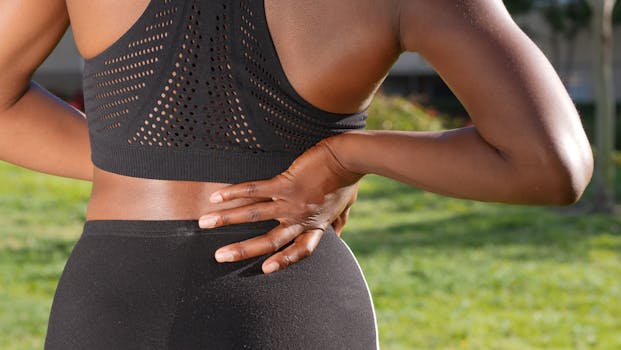
Signs That May Point to Abdominal Separation
Lower back pain on its own does not confirm anything. What helps is looking at the whole picture. Diastasis recti has been associated with a cluster of symptoms, and back pain is one of several rather than the only marker.
- A visible or palpable gap along the midline of the abdomen
- A belly that still bulges or pooches months or years after your last pregnancy
- Lower back pain, particularly when it persists alongside a weak feeling through the trunk
- Pelvic pain
- Umbilical hernia
- Urinary incontinence
- Constipation
Feeling self-conscious about a lower belly pooch and dealing with low back pain from weak abdominal muscles often arrive together. That combination is a reasonable prompt to have the abdomen properly assessed rather than assuming the answer is simply more weight loss.
Why the Link Is Not Automatic
Not every case of back pain after pregnancy traces back to the abdominal wall, and not every separation produces pain. Pelvic floor function, posture during feeding and lifting, previous injuries, training load and general recovery all play a role. NHS guidance on your post-pregnancy body includes practical tips for easing back pain, such as how you position yourself while feeding your baby, which is a reminder that daily habits shape symptoms too.
This is where a one-size-fits-all approach falls short. Two women with the same measured gap can have very different experiences, and treating them identically ignores what is actually generating the problem.

How Assessment Changes the Answer
Assessment is the step that turns a general theory into a specific plan. A thorough evaluation looks at the abdomen, core function, movement patterns, symptoms and history together, then works out which factors are likely contributing in your case. That might be the separation itself, reduced core function, or something else entirely.
At The Elite Hub in Springfield, Queensland, this assessment-first approach sits at the centre of the Mummy Tummy Rescue Plan™. The plan begins with an individual assessment, and depending on the findings, a personalised program may combine appropriate non-invasive body-contouring technologies, muscle activation and strengthening approaches, skin-focused treatments, recovery strategies and ongoing reassessment. The clinic is led by Dr Os Cooley, PhD in Anti-Aging, whose focus includes human performance, body composition, recovery and evidence-informed personalised care.
Why “Mummy Tummy” Is More Than One Thing
Persistent changes to the abdomen after pregnancy are often grouped under the term Mummy Tummy. These changes are not necessarily caused by abdominal fat alone. They may involve a combination of stubborn fat, loose or stretched skin, abdominal muscle separation, reduced core function and other post-pregnancy changes.
That matters for back pain, because a program aimed only at fat loss may leave a weak, separated midline untouched. Equally, a program aimed only at the muscles may overlook skin laxity or stubborn fat that shapes how the abdomen looks and feels. Assessment is how the components get separated from one another, so the ones actually present can be addressed.

What a Sensible Next Step Looks Like
If you have ongoing lower back pain and a belly that still bulges well after pregnancy, the practical move is to have both looked at together rather than in isolation.
- Get assessed rather than self-diagnosed. A palpable gap is not something to measure by guesswork.
- Ask about core function, not just appearance. How the trunk manages load tells you more than a photograph does.
- Address daily habits. Feeding positions, lifting technique and recovery all feed into back symptoms.
- Reassess over time. Progress with abdominal separation is not always linear, and a plan should adapt as findings change.
The Elite Hub also provides services relating to cellulite, body contouring, stubborn fat, skin laxity, chronic pain, recovery, metabolic health, VO₂ Max testing, fitness and physical performance, which means contributing factors can be reviewed together rather than one at a time. For women in Springfield and the surrounding Greater Springfield area, that means a plan built around your findings instead of a template.
Frequently Asked Questions
Where does your back hurt with diastasis recti?
Lower back pain is the complaint most commonly linked with abdominal separation, and it is the one listed among the associated symptoms. Some women describe a general ache across the lower back that lingers through the day. Because many other structures can produce pain in the same area, the location alone is not enough to confirm the cause. A clinical assessment determines whether the abdomen is playing a role in your case.
Can diastasis recti go away on its own?
It can improve, but it does not always resolve without help. Cleveland Clinic notes that the separation can make the belly bulge months or years after your last baby, which suggests time alone is not a reliable fix. Specific exercises are described as helping to close the separation. Whether yours responds, and how quickly, depends on the findings at assessment and how consistently the plan is followed.
Is it possible to fix diastasis recti without surgery?
Clinical sources describe specific exercises that help close the separation, so surgery is not the only route discussed for this condition. For many women, a structured program built around muscle activation, strengthening and appropriate load is the first consideration. Because separation often sits alongside other post-pregnancy changes such as skin laxity or stubborn fat, an individual assessment helps clarify what is realistic before any treatment decisions are made.
Does everyone with diastasis recti get lower back pain?
No. Sources on this topic state that diastasis recti can contribute to back pain, but not always. Some women have a clear separation and no back symptoms at all, while others report pain with a smaller gap. The 2023 systematic review found that some studies reported an association with low back pain, which reflects a connection worth checking rather than a guaranteed outcome for everyone.
What other symptoms are associated with diastasis recti?
Beyond lower back pain, diastasis recti has been associated with pelvic pain, umbilical hernia, urinary incontinence and constipation. A visible bulge or pooch along the midline and a feeling of reduced core support are also commonly described. Because these symptoms overlap with other post-pregnancy changes, including reduced core function and skin laxity, assessment helps identify which factors are present and which need attention first.
