

Before and after photos of a mummy tummy are everywhere online, and they almost always tell the same neat story: a soft, bulging belly on the left, a flat, firm one on the right, and a caption crediting a workout program. What those images rarely explain is what the person actually did, what their abdomen looked like underneath the skin, and whether the change came from exercise at all. That gap is where a lot of frustration begins for women who train consistently and still see a shape in the mirror that does not match the effort they are putting in.
Exercise is genuinely useful after pregnancy. It also has clear limits. Understanding where those limits sit makes it far easier to decide what to do next, rather than assuming you simply need to work harder.
What “Before and After” Actually Means With a Mummy Tummy
A mummy tummy is commonly described as a soft, bulging belly that can appear after pregnancy. It is not one single condition. The changes women notice may involve a combination of stubborn fat, loose or stretched skin, abdominal muscle separation (diastasis recti), reduced core function and other post-pregnancy changes, all layered together in a way that differs from person to person and from pregnancy to pregnancy.
That matters because “before and after” only makes sense when you know what you are starting with. A woman whose main issue is a weakened, separated abdominal wall has a very different starting point to a woman whose abdominal muscles have recovered well but whose skin has lost elasticity, or to someone carrying stubborn fat that has not shifted with diet and training.
Two people can follow an identical exercise program and get completely different visual results, not because one tried harder, but because their bodies were not starting from the same place. Treat any before and after image you see online as one person’s outcome, not a prediction of your own.
What Exercise Can Genuinely Change
Exercise earns its place in postnatal recovery, but it helps most when it is matched to what your body actually needs. The evidence and clinical experience in this area point to a few areas where movement genuinely delivers.
Deep core activation
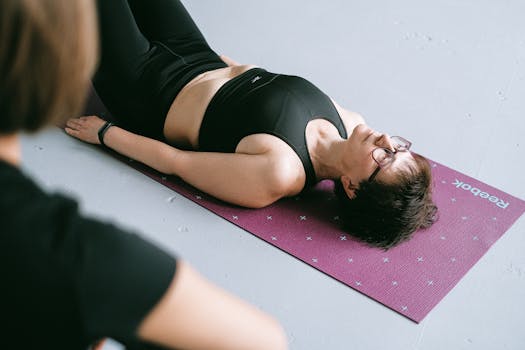
Gentle, wall-supported postpartum exercises are a common starting point for safely activating the deep core muscles. These are not glamorous and they will not leave you sweating, but they teach the abdominal wall to switch on again in a controlled way before load is added. Starting here rather than rushing into intense workouts is a recurring theme in postnatal training guidance.
The right postpartum exercises can help rebuild strength, improve mobility and support the core. That is a function and comfort win as much as an appearance one, and it tends to show up in daily life before it shows up in a mirror.
Breathing and Pilates-based work
Some of the most useful exercises for a mummy tummy are Pilates-based with breathing incorporated, specifically to reduce the separation of the abdominal muscles. The breathing is not decoration. Coordinating breath with movement helps manage pressure inside the abdomen, which is part of why these exercises are favoured over high-pressure moves like crunches and heavy sit-ups during early recovery.
Gradual strengthening of the core
Beginner postnatal workouts can help strengthen and tone the core area while allowing the abdominals to heal. The word that matters there is heal. Progress comes from repeated, controlled work over time, not from smashing the area as hard as possible in the first few weeks.
What Exercise Cannot Do on Its Own
This is the part that gets left out of the captions, and it is often the most useful thing a woman can hear.
It cannot always close a separation
Each pregnancy causes the abdominal muscles to separate in order to make room for the baby. Once that has happened, the right exercises can support the muscles in coming back together, and many women see meaningful improvement. But exercise is not a guaranteed fix, and for some women the separation does not resolve with training alone. Assuming it will, then concluding you have failed when it does not, is a common and unnecessary source of distress.
It cannot change skin or fat on its own terms
Loose or stretched skin does not respond to core exercises, because a plank does not act on skin. Stubborn fat is also not reliably solved by targeting the belly with more abdominal work. Plenty of women describe being consistent at the gym for a year or longer and still finding the belly pouch hard to shift. That experience is common enough that it should be treated as information about the problem, not evidence of a character flaw.
Before and After: What Exercise Influences and What It Doesn’t
The table below sets out a practical way to think about which changes respond to training and which usually need a broader approach.
| What you notice | Does exercise help? | Why |
|---|---|---|
| Core strength and control | Yes, strongly | Deep core activation and postnatal strengthening work directly target function. |
| Abdominal separation | Often, partially | Pilates-based breathing work is used to reduce separation, but results vary. |
| Stretched or loose skin | Limited | Exercise does not restore skin elasticity. |
| Stubborn belly fat | Only as part of a wider plan | Abdominal exercise alone does not reliably resolve a persistent pouch. |

Why Some Women Train Hard and See Little Change
The most common story in this space is not a lack of effort. It is effort applied to the wrong problem. A woman who has been doing traditional exercises for months, sometimes a year or more, and still cannot shift the belly may be training an abdominal wall that has not recovered its function, or chasing fat loss when part of the issue is skin, or working hard without addressing a separation that makes certain movements counterproductive.
If your abdomen has not responded as expected to weight loss, diet or exercise, the honest conclusion is not that you need to lose more weight or try harder. It is that the reason has not yet been identified. That is a testable question, not a matter of willpower.
The Step Most People Skip: Assessment First
Rehabilitation and body change both go better when they start with measurement rather than guesswork. At The Elite Hub, a science-based wellness, body transformation and performance clinic in Springfield, Queensland, the approach is summarised simply: We Don’t Guess. We Test. Before any recommendation, the team assesses what may be contributing to the concern.
For post-pregnancy abdominal changes, that means looking at the whole picture rather than assuming the answer. The Mummy Tummy Rescue Plan™ begins with an individual assessment, and depending on the findings a personalised program may incorporate appropriate non-invasive body-contouring technologies, muscle activation and strengthening approaches, skin-focused treatments, recovery strategies and ongoing reassessment. The clinic is led by Dr Os Cooley, PhD in Anti-Aging, whose focus is evidence-informed, personalised care rather than a one-size-fits-all protocol.
Exercise belongs in that plan. It is simply more likely to work when it is aimed at the right target, in the right order, with someone checking whether the approach is actually doing what it was meant to do. If you are in Springfield or the Greater Springfield area and want clarity on what is driving your mummy tummy, an assessment is a sensible first move before another program, another challenge or another round of guesswork.
Frequently Asked Questions
How long does it take to see a difference in a mummy tummy?
There is no single timeline, because the answer depends on what is driving the change in your case. Core strength often improves before anything is visible, and separation, skin and fat each respond on different schedules. Rather than chasing a fixed date, track function and comfort, and have your progress reassessed so you know whether the plan is working.
Can exercise close abdominal separation on its own?
Sometimes it helps significantly, and sometimes it does not. Pilates-based exercises with breathing incorporated are commonly used to reduce the separation of the abdominal muscles, and beginner postnatal work can support healing. But exercise is not a guaranteed fix, which is why assessment matters before you commit months to a program that may not suit your situation.
Is it normal for my stomach to look different after a workout?
Short term changes in how your abdomen looks after training are not a reliable scorecard either way. What matters is the pattern over weeks and months, alongside how your core feels and functions. If you are unsure whether what you are seeing is progress or a sign the approach is not right for you, get it assessed rather than guessing.
When can I start exercising after giving birth?
That depends on your birth, your recovery and clearance from your own health professional, so it is not something to decide from a general article. Gentle, wall-supported exercises that safely activate the deep core muscles are often used as a starting point once you are cleared. Confirm your individual timing with your treating practitioner.
Why have I trained for a year and still got a belly pouch?
Because effort and accuracy are different things. Many women report being consistent at the gym for a year or more without losing the pouch, often because the underlying contributors were never identified. Fat, skin laxity, muscle separation and reduced core function each need a different approach, and assessment is how you find out which ones apply to you.
