
The Elite Hub · Advanced Anti-Ageing Centre
Mummy tummy after pregnancy, assessed and treated in Augustine Heights
The shape of your middle after pregnancy is usually not one problem, which is why one solution keeps missing. We assess what is actually happening, then build the plan around it.

Introductory offer
$115 Initial Assessment + First Session
Your $115 Initial Assessment includes an assessment of your pelvic floor and core, plus a session on the day. We’ll assess what is happening and discuss appropriate next steps with you.

What is a mummy tummy?
A mummy tummy is a description of how the middle looks and feels after pregnancy. It is not a diagnosis, and it is not one thing. Most women who come to us with one have a combination, and the combination is what decides the plan.
The first part is connective tissue. Your rectus abdominis muscles run vertically down the front of your abdomen, joined by a band called the linea alba. In pregnancy that band stretches and thins, so the two sides sit further apart. That is diastasis recti, also called abdominal separation or rectus abdominis separation. It is not a torn muscle and it is not automatically a hernia. If you want the full explanation, our article on what diastasis recti is covers it properly.
The second part is coordination. Muscles that have been stretched for months, and a trunk that has spent nine months managing pressure in a completely different way, do not automatically return to working as a team. You can have a small gap and a middle that does not support you, or a wider gap and a trunk that works well.
The third part is skin and fat distribution, which genuinely does change with pregnancy and does not respond to core exercises. That is not a failure of effort, and it is worth saying plainly because a lot of women spend years doing the wrong work for that reason.
How do you get rid of a mummy tummy?
You work on function first, and let appearance follow. That is the honest answer, and it is not the one most marketing gives you.
In practice that means restoring how your trunk manages pressure, then rebuilding strength progressively, then loading it with the things your life actually asks of you: lifting a child, carrying shopping, running, getting off the floor. The middle usually looks firmer as a result, because a wall that works looks different from one that does not. But function is the target and appearance is the by-product, not the other way around.
What does not work, on its own, is diet and general exercise. Both are worth doing for their own reasons, and neither restores coordination to a stretched abdominal wall. Crunches are not banned for life, they are simply a poor starting point for a middle that cannot yet manage pressure.
What is the difference between a mummy tummy and abdominal separation?
A mummy tummy is what you see and feel. Abdominal separation is one of the things that can be causing it. The mummy tummy is the description; diastasis recti is a finding.
That distinction matters because it changes what you would do. If the shape is driven by connective tissue and coordination, the work is rehabilitation. If it is driven by skin and fat, core exercise will not change it. Most women have some of each, in different proportions, and an assessment is what separates them.
Why does my stomach still look pregnant?
Because the tissue stretched, the muscles lost coordination, and the shape of the middle is now managed by a wall that is not generating tension the way it used to.
There are a few other contributors worth knowing. A caesarean scar can change how the lower abdomen engages. Posture and breathing patterns shift during and after pregnancy and often stay shifted. And time alone does not fix coordination: the tissue may settle, but the way your trunk works is a skill, and skills need practice.
This is also why general exercise can leave you fitter without changing the shape. General exercise trains movement. It does not necessarily train pressure management, and pressure management is the thing that is missing.
What we assess
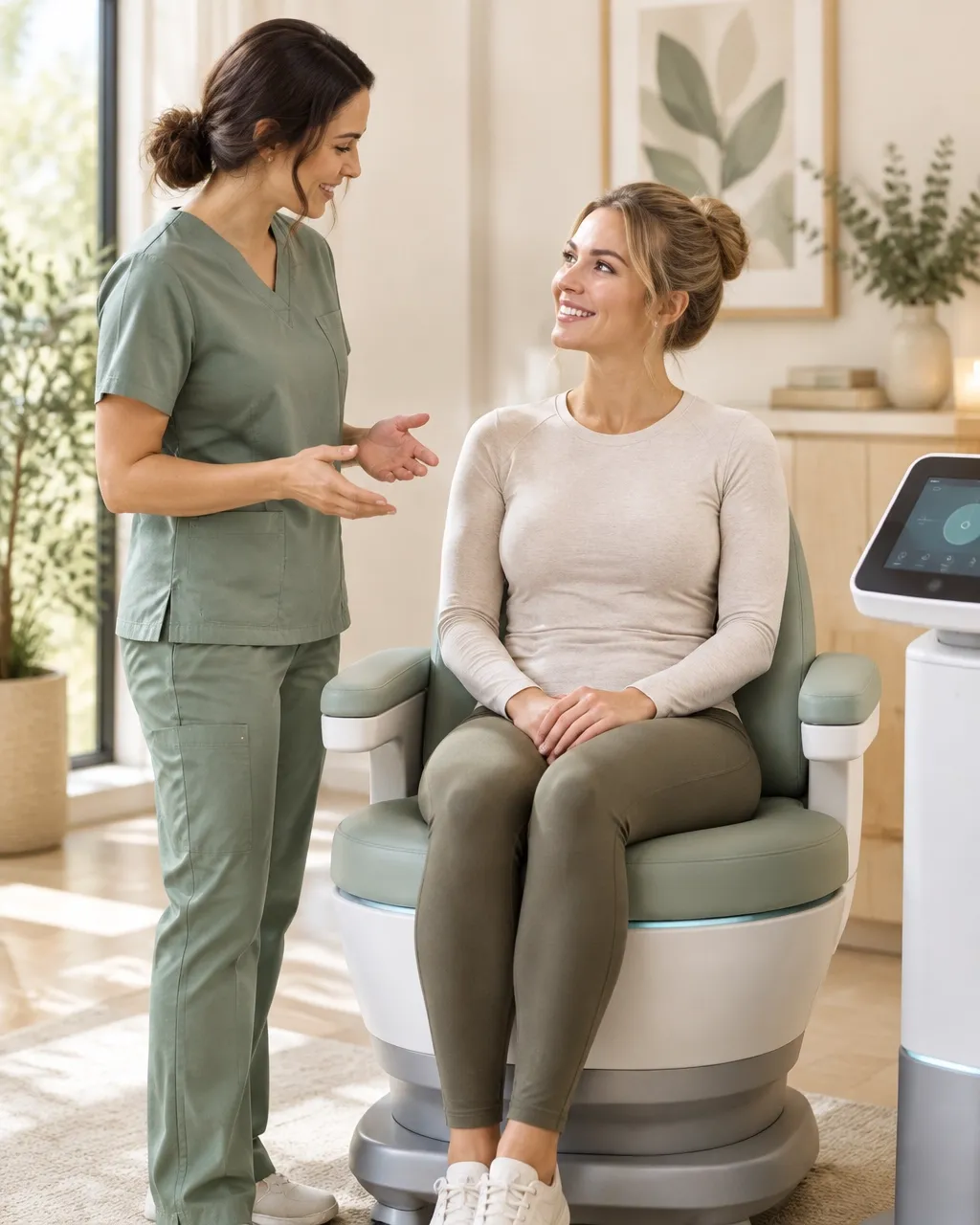
A proper assessment of what is actually happening in your core, and a clear plan for what to do about it.
We look at the distance between your abdominal muscles at several points along the midline, not just one. We look at the depth and tension of the linea alba at rest and during movement, which tells us more than width alone. We check whether the abdominal wall engages and coordinates, and whether doming appears. We look at your breathing and how you manage pressure through your trunk, your pelvic floor function, and the loads your daily life actually places on you.
Two women can arrive with an identical measurement and leave with completely different plans, because one is returning to running and the other is lifting a toddler forty times a day. We test, we don't guess, because the test is what tells us which of those you are.
What treatment looks like
The plan is built from your findings, and it is staged. Breathing and deep core connection come first, because the wall cannot generate tension it has not learned to generate. Progressive strength work follows, moving from positions where you have control to the movements you actually want to get back to.
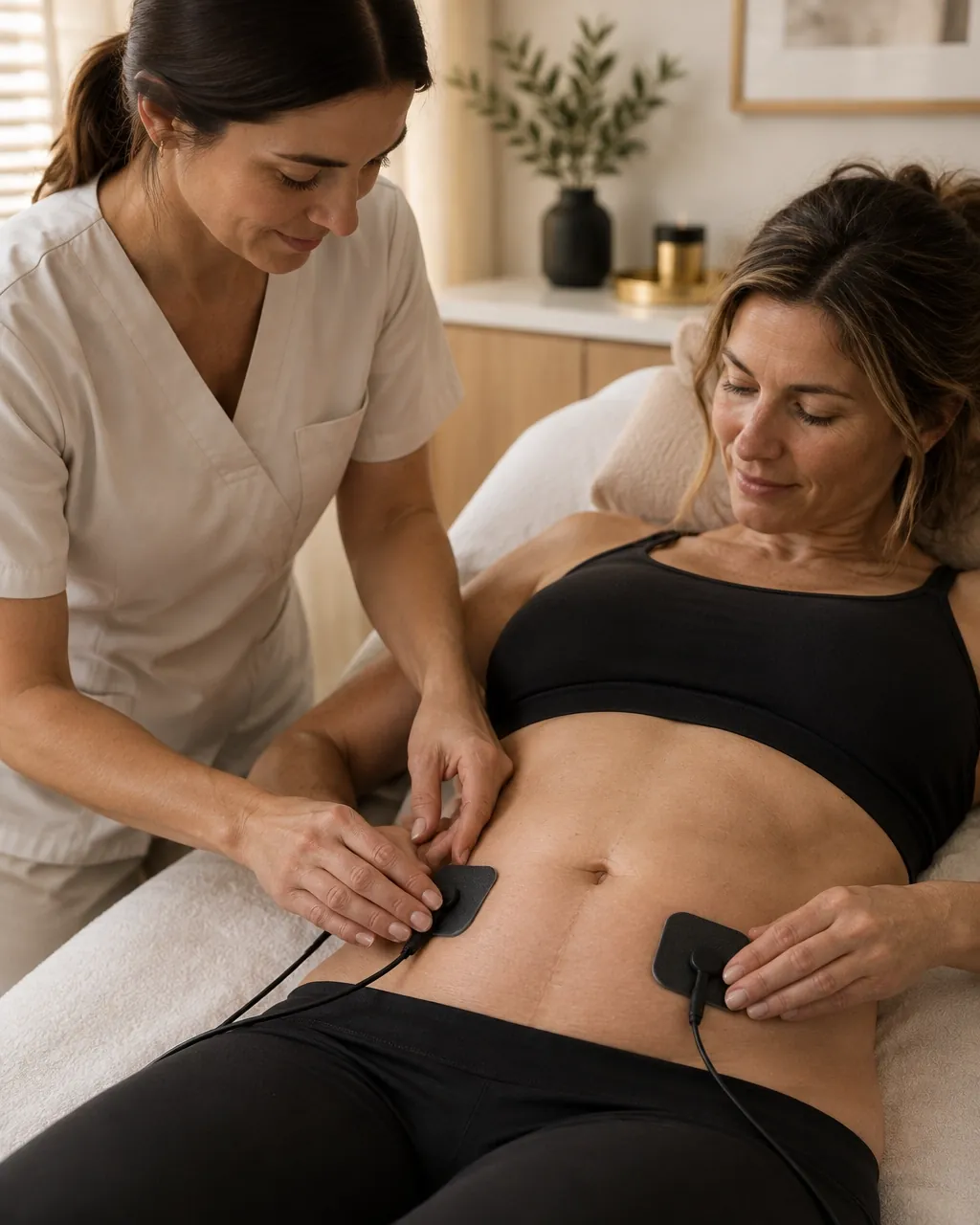
Where the assessment shows the pelvic floor is part of the picture, pelvic floor training is included. Where separation is limiting how the core functions, we may use electro-muscular stimulation to support the abdominal muscles alongside your rehabilitation, not instead of it. Where swelling or tissue recovery needs support, recovery options are available.
We reassess rather than guess, so you can see what is actually changing and the plan can progress or change direction.
Honest limits
We cannot promise the gap will close completely, and it does not have to for your core to work well. A separation can stay the same width and work considerably better, because the tissue is managing tension and the muscles are coordinating again. A number on its own was never the whole picture.
We do not promise fat loss or a particular cosmetic result. Individual results vary. If you have a suspected hernia, significant pain, or a bulge that is worsening, that needs medical assessment, and we will tell you so. This page is general information, not individual medical advice.
How long does it take?
Connective tissue adapts over months, not weeks. Progress depends on your starting point, how consistently you do the work, and how much load your life puts through your trunk. Some weeks will feel like nothing is changing, and that is normal rather than a sign the plan is wrong.
The first changes are usually in how movement feels rather than how the middle looks. Less doming when you sit up. More support when you lift. A trunk that feels like it is doing its share. Appearance tends to follow, and it is worth being patient with that order because it is the order that holds.
Who we help
Women come to us years after their last pregnancy, not only in the first months. Some are mainly concerned about appearance. Others want to lift, run, or get through the day without feeling unsupported. Both are reasonable reasons to ask for an assessment, and neither needs to be justified.
This sits within our Feel Better pillar, alongside pelvic floor support, mobility and physical recovery. If you are also working on the way your middle looks, the Look Better pillar covers the aesthetic side. They are not separate businesses, and the same assessment often serves both.
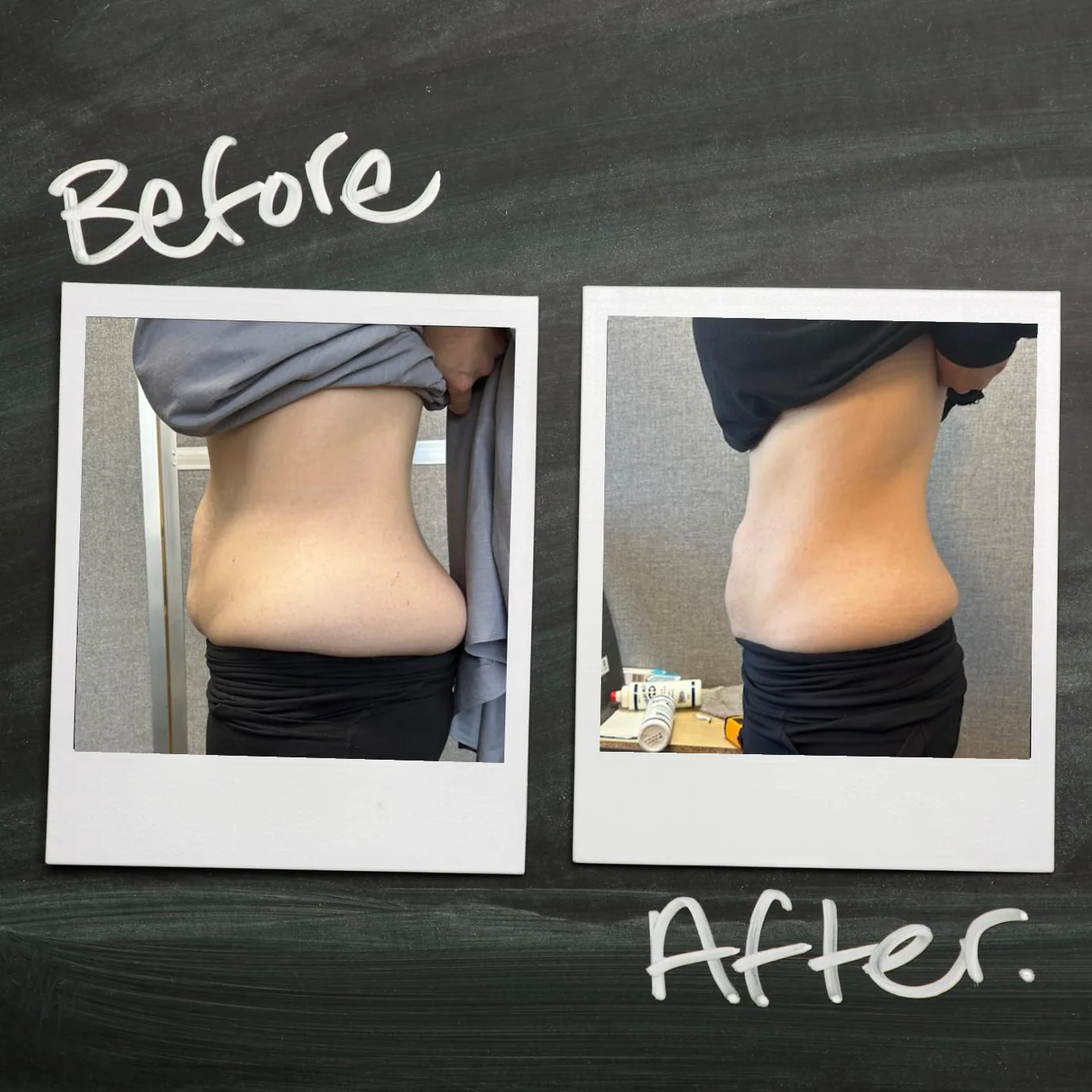
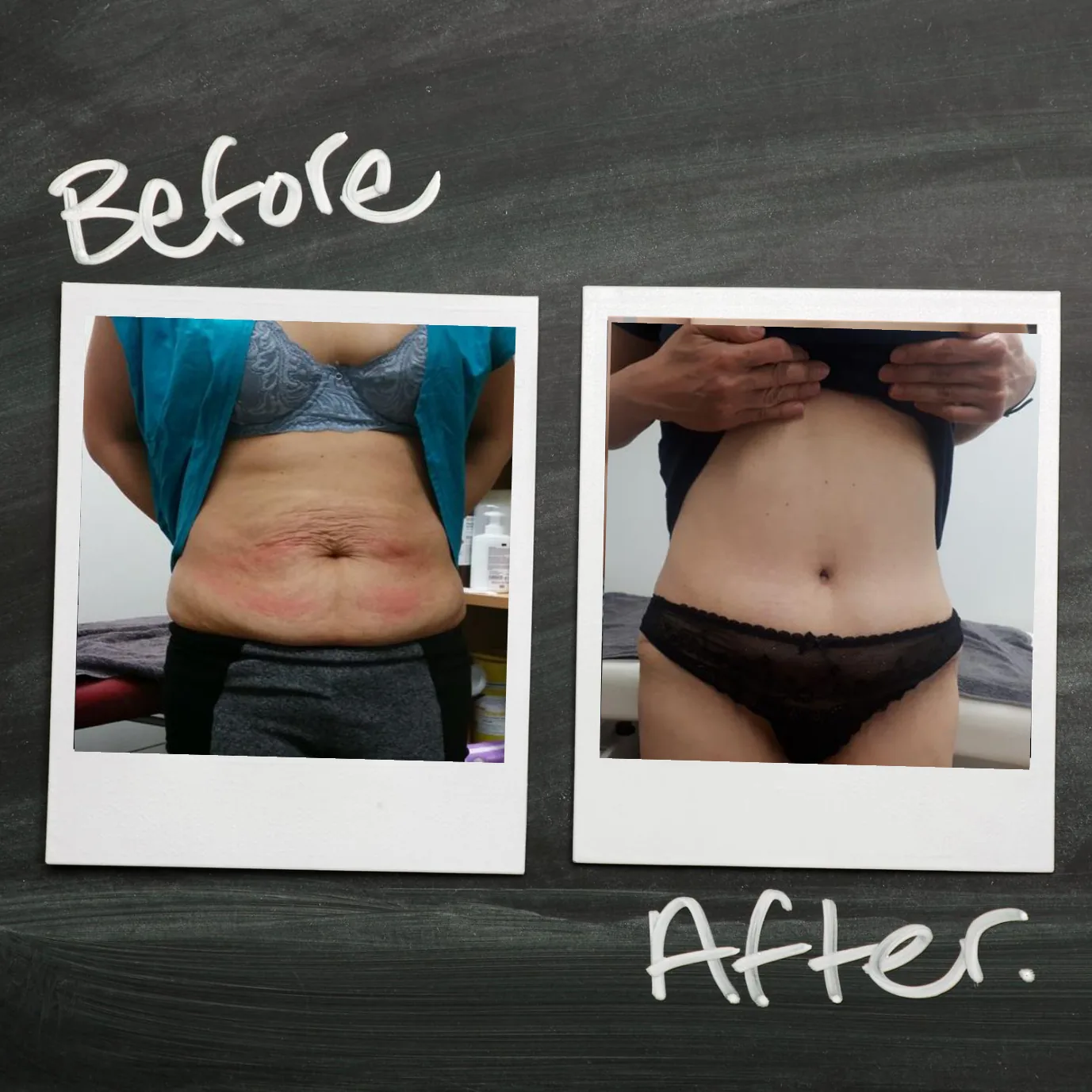
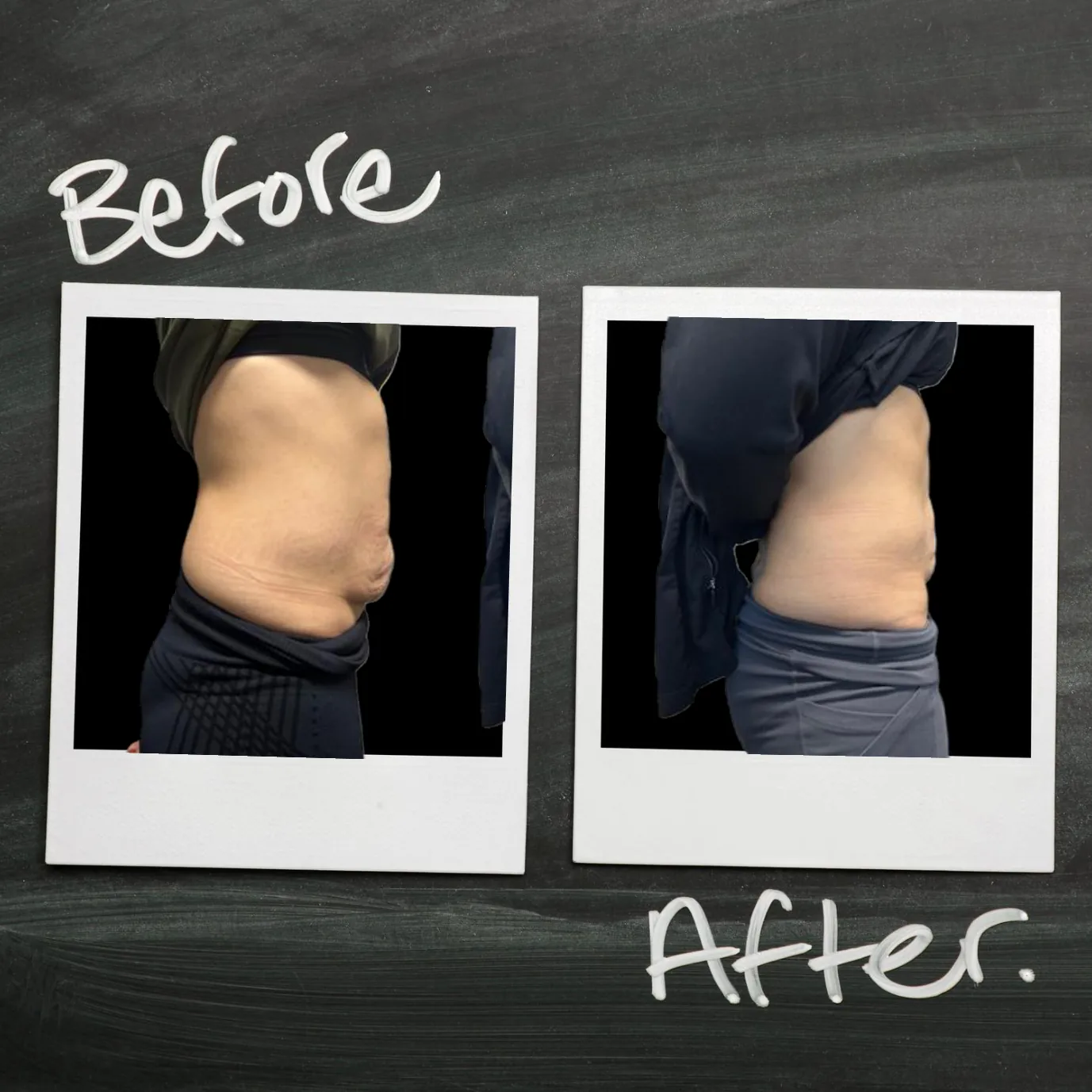
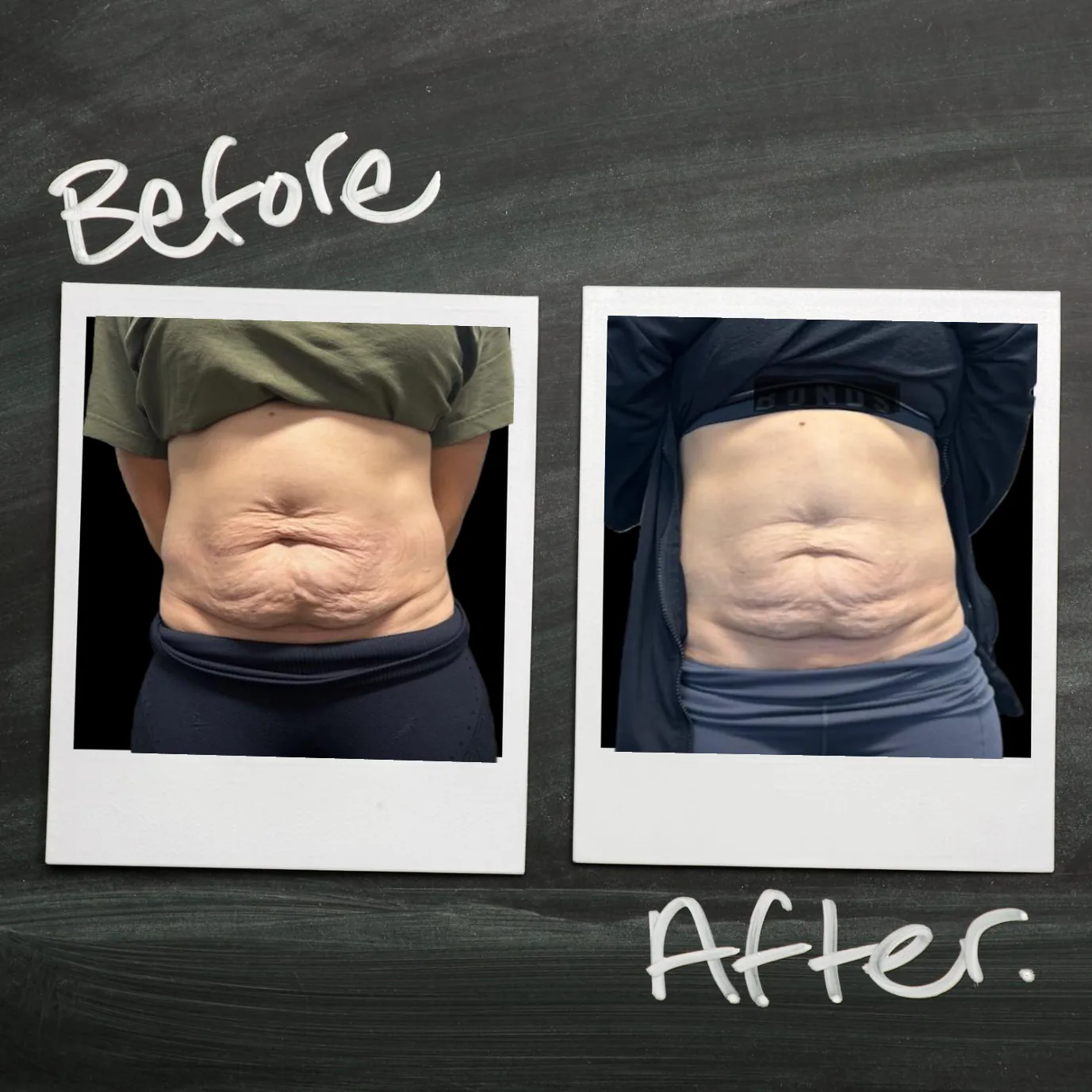
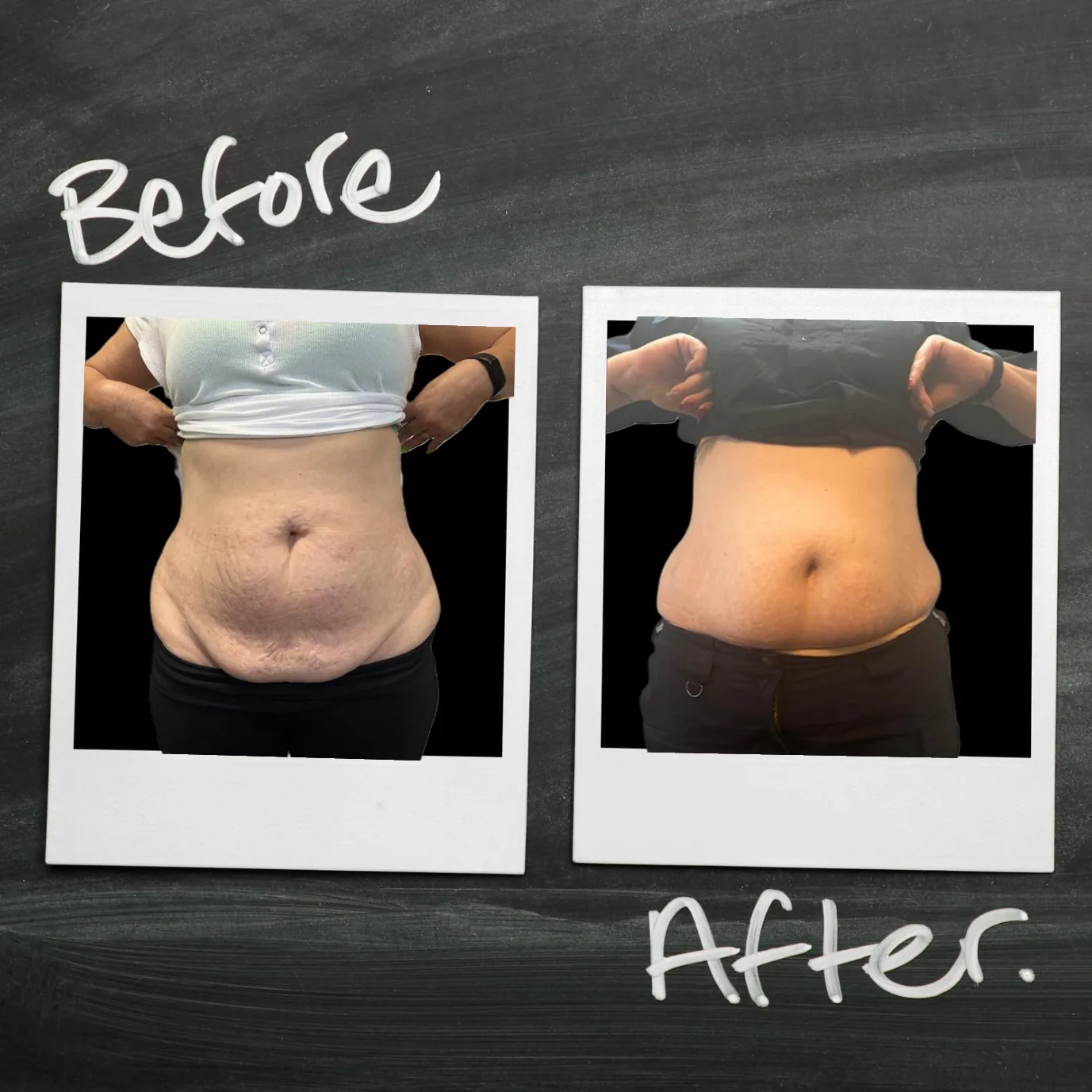
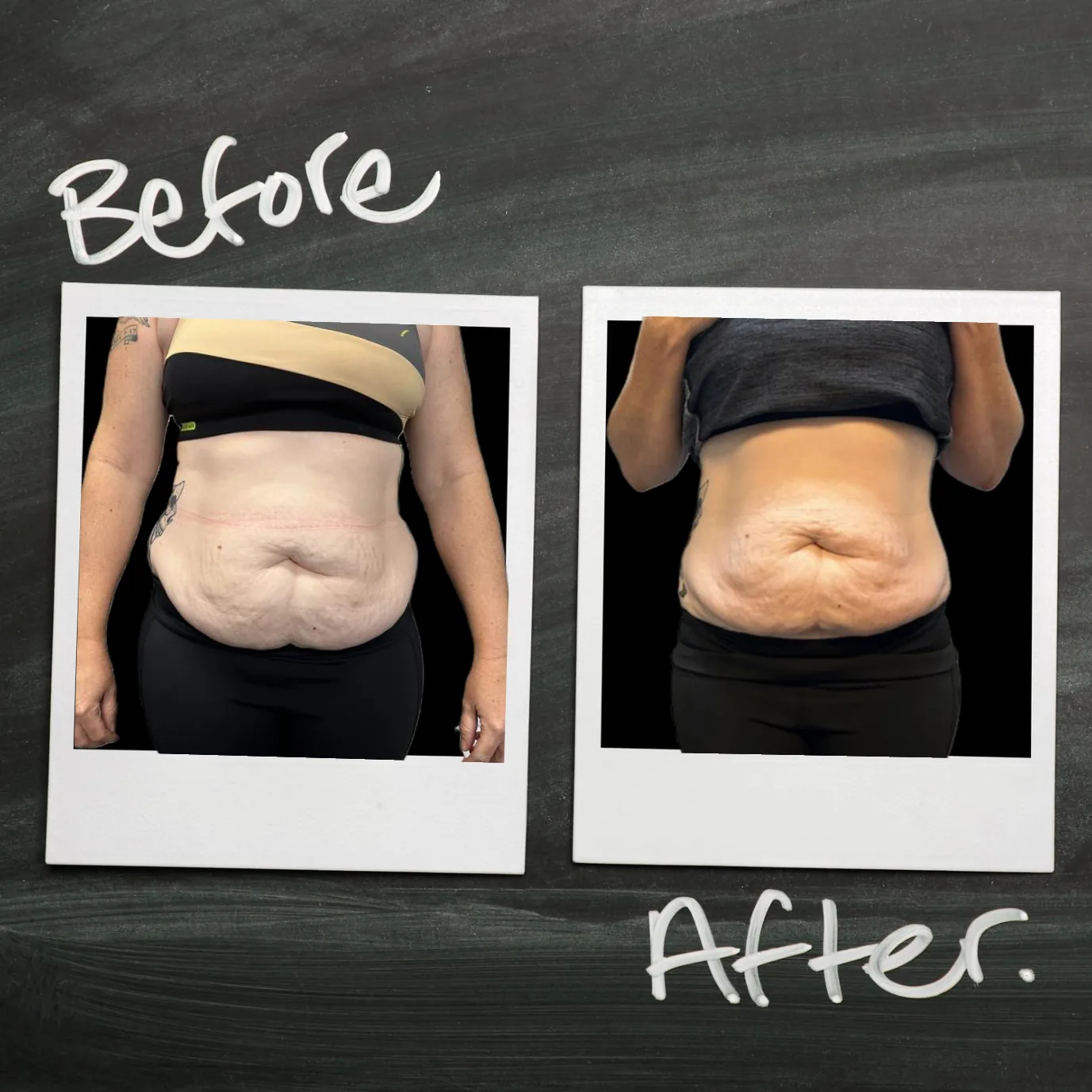
Abdominal examples
Before and after
These images show individual examples and do not predict the results another person may experience. Individual plans and results vary.
Start with an assessment
Book a $115 Initial Assessment at The Elite Hub in Augustine Heights, near Springfield and Ipswich. It includes an assessment of your pelvic floor and core and a session on the day. Call 07 3543 0602 or book online.
the shape is the symptom, coordination is the thing to work on, and the assessment tells you where to start.